
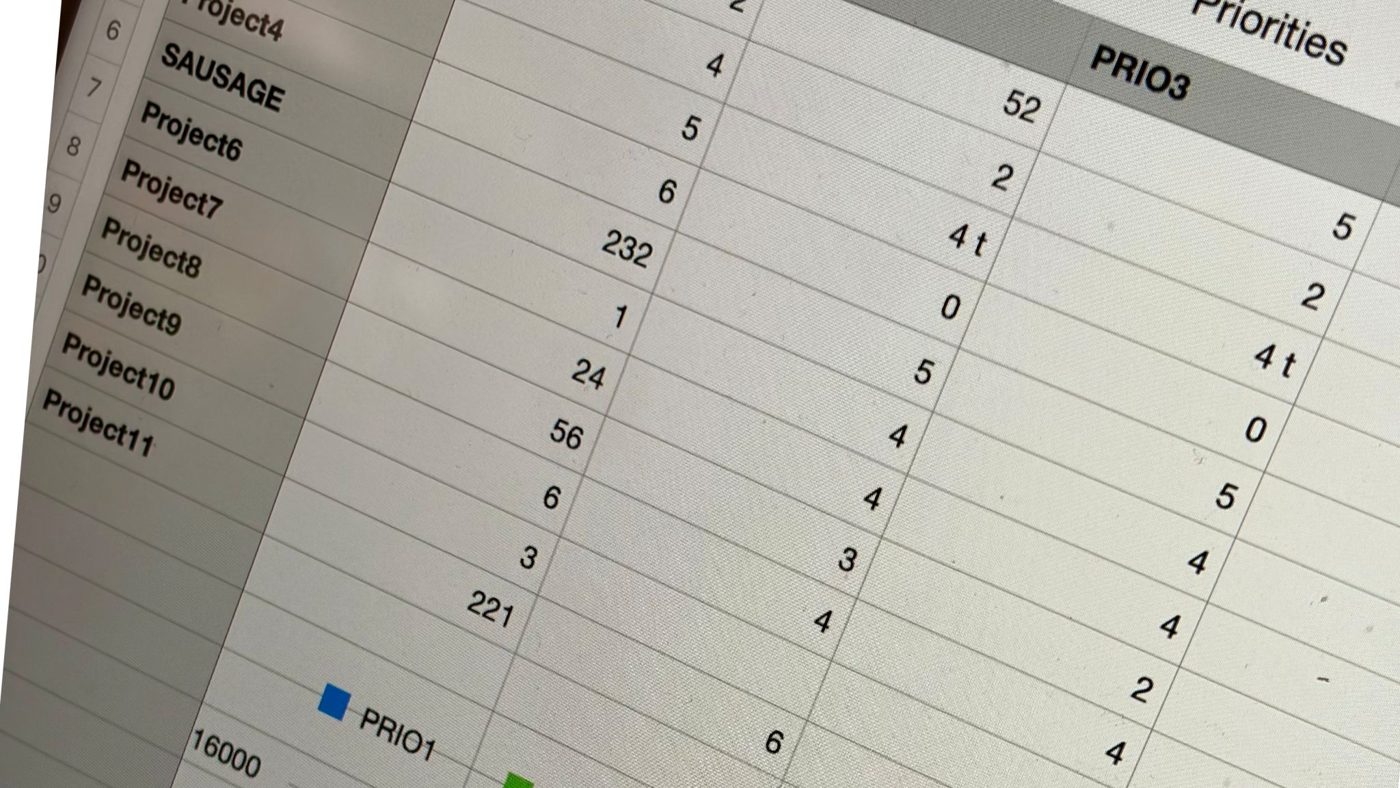
We have all seen prioritization tables: Excels, SharePoints, fillable PPT decks that hopefully someone remembers to feed into one of these tables with perhaps a note on what it is and where it came from. However, sometimes these tools become so excessive and honestly frightening that the users are merely trying to survive through them (Oh, Lordy-lord, there’s still the prioritization to be done!) by filling in the information when most convenient with one thing in mind, to get it over with. Once the monster’s fed, the user will retreat to waiting and hoping that the machine will somehow produce the winning numbers.
Obviously users understand the criteria conceptually and by their verbal description, but will rarely stop and think about their purpose and the magnitude of power this tool possesses, and why and when it became the judge and gatekeeper. They might think that this piece of “technology” can’t determine that much. Heck, I could make up these numbers to boost my project, but someone would notice it. Right?
Not necessarily. The reason being that the decision mechanism doesn’t have a real owner, but the selection decisions are automated, which leads to human decisions being made at a later stage, but they are still based on the ranking of this infallible model. There might be a “champion” but… you know.
But how does a thing like this get cooked up then? The chain of decision might go something like this. An SVP informs the VPs that we are doing a lot, but the common thread is missing, we’re doing too much and getting too little done(!). We need to run a tighter ship here, squeeze that funnel for me, squeeze hard (Rabban). The VP level will hand over the task to the directors with a throat-tightening deadline, explaining the need for a tool that will prioritize the essential projects and ideas according to OUR STRATEGY. The request trickles further down and ends up being produced by some minions in the lair of the middle manager.
But who eventually owns the decisions here? Who decides what the criteria are and how much weight each criterion carries? The silent assumption required for this to work is that every layer of the company should understand the strategy as well as the CEO, even when it might be difficult for the SVP to communicate it clearly to his army of people. “Well, everyone should know this by now. Weren’t you attending the town hall?”
At some point the tool will be finished and winched back up above the clouds for the S+VP section to examine. Everyone’s relieved that now we can report to the CEO that “we have taken firm action in streamlining our focus that will enable us to carry out our strategy and mission (and vision) more consistently and with visible results”. In no case will they condescend to examine the details of some individual tool. That’s way below their pay grade.
But without anyone knowing it, by making this thing appear via numerous disjointed layers, an unquestionable deity is created whose internal mechanics no one really understands. Yet this seemingly innocuous tool has suddenly become embedded as the translator between strategy and operations. Wild.
Thankfully a spreadsheet can’t think.